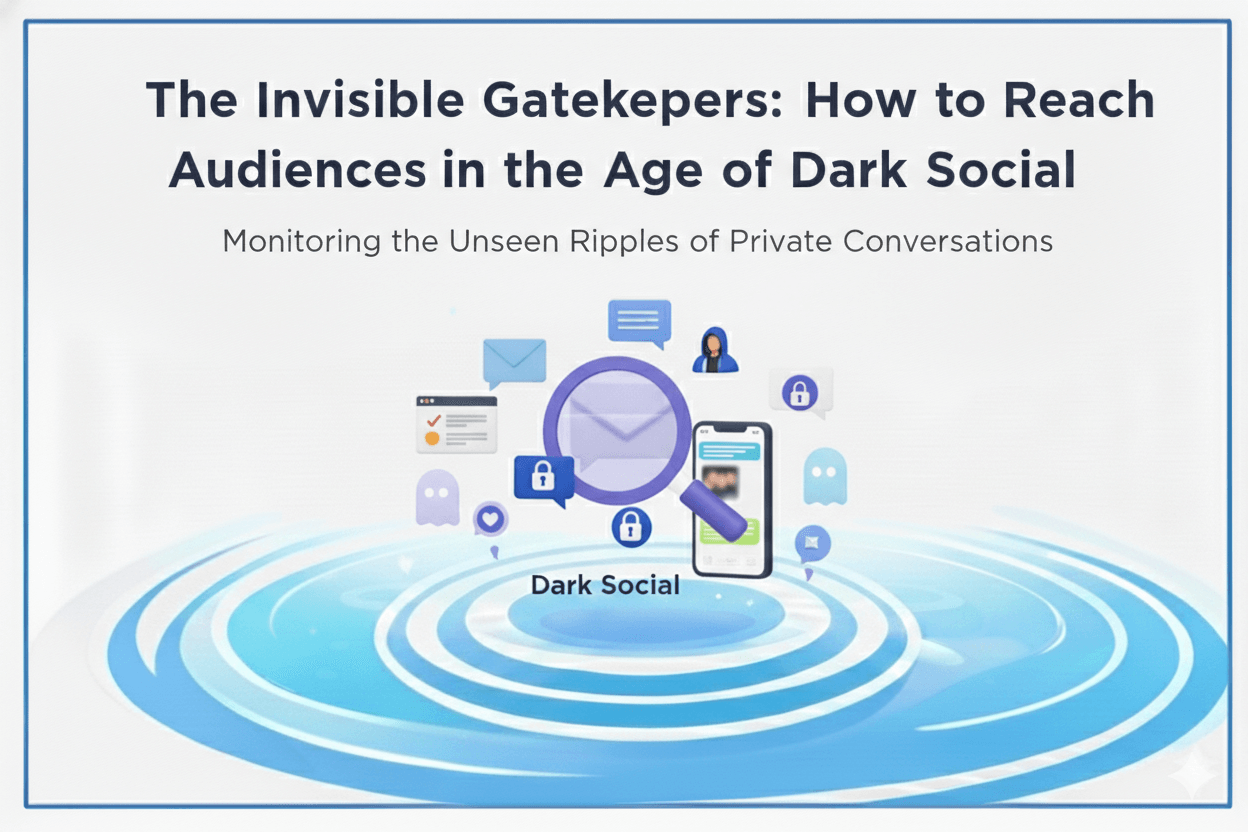
The Problems Media Monitoring Solves: Lighting Up the Dark Channels
In the current digital landscape, the most impactful conversations about your brand aren't happening on public timelines—they are occurring in the "Dark Social" shadows. This includes private messaging apps, email, and encrypted groups where content is shared without tracking parameters. For business owners and PR professionals, this represents a massive, untracked ecosystem of influence. Without advanced media monitoring, you are effectively locked out of the most honest and high-converting conversations regarding your brand.
The Problem: The "Direct Traffic" Blind Spot
The primary pain point of Dark Social is the attribution gap. You see a spike in "direct traffic" to your website, but you have no idea what caused it. Was it a mention in a high-authority print journal that someone photographed and shared in a WhatsApp group? Was it a broadcast segment on a niche radio station that sparked a private discussion among CEOs? Without automated tracking, you cannot trace the ripple back to the source, leaving you unable to replicate your successes or defend against invisible threats.
The Solution: Cross-Channel Signal Correlation
One of the primary media monitoring benefits is the ability to correlate public signals with private behavior. While no tool can "read" private messages, sophisticated monitoring tracks the *public catalysts* that drive Dark Social sharing. By monitoring high-authority print, broadcast, and online mentions in real-time, you can see exactly which stories are breaking at the moment your "direct traffic" spikes. This allows you to identify the "Invisible Gatekeepers"—the journalists and outlets that possess the power to make your brand a topic of private conversation.
Reputation Management: Defensive Strategy in Encrypted Spaces
Your brand reputation is often decided in places you can't see. When a story goes viral in private groups, it creates a "whisper network" that can be devastating to your brand's integrity.
The Problem: The Invisible Crisis Escalation
Traditional crisis management is reactive; it waits for a story to hit the mainstream news. However, in the age of Dark Social, a crisis can incubate for days in private Slack channels or Discord servers. By the time it reaches a public platform, the sentiment has already hardened. Manual methods are useless here because by the time you "find" the crisis, the damage is already permanent. You are essentially fighting a ghost that has already convinced your audience of its reality.
The Solution: Real-Time Sentiment Surveillance
The solution lies in monitoring the "edges" of the conversation. By using AI to track sentiment across the entire media spectrum, you can identify the moment a narrative shifts from public curiosity to private concern. This allows for proactive crisis management, where you release clarifying information or authoritative statements that your audience can then "share back" into those dark channels, effectively mediating the crisis from the inside out.
Market & Industry Insights: Finding the "Hidden" Influence
To stay ahead, your PR strategy must identify what the gatekeepers are talking about before those topics reach the masses.
The Problem: The Lagging Indicator Trap
Many businesses rely on "trending topics" on social media to guide their market insights. The problem is that social trends are lagging indicators; by the time something is trending publicly, it has already been discussed in the inner circles of the industry for weeks. If you are only monitoring the "Light Social" world, you are always arriving late to the market shifts that actually move the needle for your business.
The Solution: Professional and Trade Media Intelligence
Dark Social sharing is often fueled by high-authority professional content—think paywalled trade journals and exclusive print editorials. Monitoring these sources provides competitive intelligence{" "} that your rivals miss. You see the "input" that drives the "output" of private industry discussions. This allows you to pivot your messaging to address the industry's private anxieties and ambitions before they become public knowledge.
Competitive Analysis: Identifying the Rival’s "Dark" Footprint
Your competitors are likely being discussed in private groups more than they are on public feeds. Finding out why is the key to tactical displacement.
The Problem: The Silent Market Share Erosion
- Unseen Referrals: A competitor may be winning deals through a private referral network sparked by a specific regional broadcast interview.
- Invisible Advocacy: Rivals might be gaining "expert" status through print columns that are being widely distributed as PDFs within executive circles.
- The Shadow Lead: Without monitoring, you won't realize your competitor is being hailed as the "innovative choice" in spaces where you have no presence.
The Solution: Share of Voice vs. Share of Search Correlation
By tracking your competitor's media footprint across print and broadcast, you can use competitive intelligence to predict their Dark Social success. If they are receiving high-authority mentions but low social engagement, it’s a sign that their content is being shared privately. This tells you exactly where you need to interject your own PR strategy to reclaim the narrative in those influential shadows.
Identifying Influencers: The Gatekeepers of Private Trust
The most powerful influencers in 2026 aren't the ones with the most followers; they are the ones whose work gets shared via a "Copy Link" into a private chat.
The Problem: Wasted Reach and Superficial Influence
Many PR professionals spend their budget on "public influencers" who have high vanity metrics but zero "Dark Social" resonance. These influencers are scrolled past, not shared. This results in poor PR reach and a lack of true audience penetration. You are paying for a megaphone when you should be paying for a whisper.
The Solution: Tracking Narrative Resonance
Advanced media monitoring benefits include the ability to see which journalists and creators are consistently "cited" as sources of truth. By identifying the Narrative Leaders whose work bridges the gap between public news and private sharing, you find the true gatekeepers. These are the people whose stories move the needle because they provide the "social currency" people want to share with their peers.