The Cost of Ignorance: Why Seeing the Whole Picture Matters
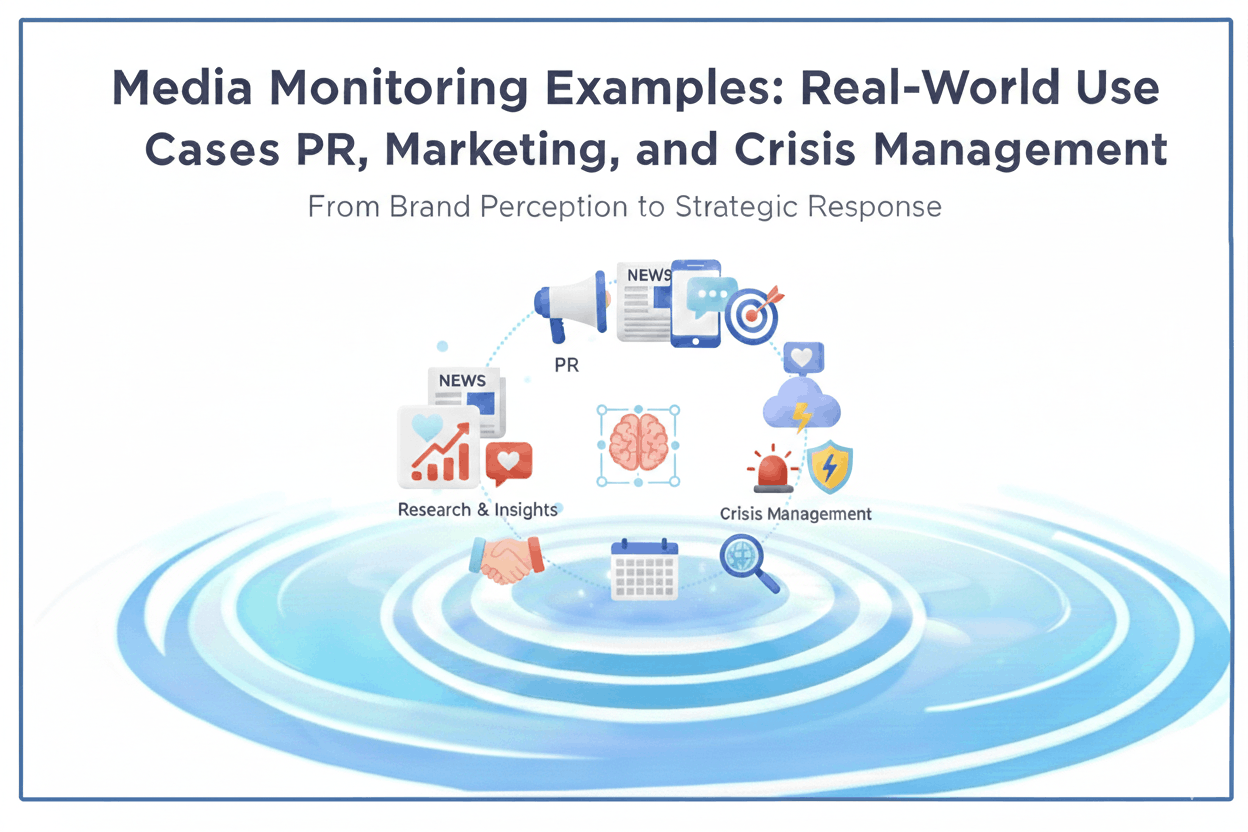
In the modern corporate ecosystem, what you don't know won't just hurt you—it will likely be the catalyst for your next PR disaster. For many business owners and seasoned PR professionals, the traditional "press clipping" mindset is a relic of the past. Today, information is decentralized, instantaneous, and often chaotic. Without a robust system to filter this noise, brands operate with a cognitive bias, believing their internal messaging is the only reality their customers see. This article explores concrete Media Monitoring Examples that demonstrate how the world's most resilient brands use data to stay ahead of the curve.
The Problem: The 'Echo Chamber' Strategic Failure
The specific pain point for many growing brands is the Information Echo Chamber. You launch a campaign, your internal team loves it, and your immediate social circle provides positive feedback. However, in a niche forum or a regional news outlet, a different story is brewing. Manual tracking methods are inherently biased; we search for what we *expect* to find. This leads to massive "blind spots" where negative sentiment or competitive shifts go unnoticed until they reach a critical mass that is impossible—and expensive—to reverse.
The Solution: Comprehensive Visibility as a Growth Lever
The core Media Monitoring Benefits lie in the elimination of surprise. By utilizing automated services to scan global news, social platforms, broadcast media, and even the "dark web" of forums, brands gain an objective, unfiltered view of their market presence. This visibility allows PR professionals to validate their PR Strategy with empirical data, proving that their efforts are moving the needle in the right direction, rather than just shouting into the void.
1. Brand Reputation: From Passive Defense to Active Shaping
Consider a national retail chain that notices a slight dip in quarterly sales despite positive national headlines. Without granular monitoring, they might attribute this to "market fluctuations."
The Problem: The Slow Erosion of Trust
A specific pain point often ignored is Regional Sentiment Divergence. While the national brand looks healthy, a series of local Facebook groups in a key demographic might be complaining about specific store hygiene or staff behavior. Because these mentions don't hit the "Big News," they are missed by manual searches. This localized rot eventually scales, leading to a systemic Brand Reputation collapse that catches headquarters by surprise.
The Solution: Hyper-Local Sentiment Tracking
By using media monitoring to track location-specific keywords and regional outlets, the brand identifies these "micro-crises" immediately. They can deploy regional managers to solve the specific issues before they become a national story. This transforms the brand from a distant corporate entity into a responsive, attentive neighbor.
2. Crisis Management: The Power of the 'First Hour' Response
In 2026, the lifespan of a scandal is measured in minutes. Let's look at a tech startup facing an unexpected data vulnerability report.
The Problem: The Information Vacuum in a Crisis
The primary pain point during a crisis is the "Speculation Surge." When a brand is slow to respond, the public—and journalists—fill the silence with their own theories. Manual monitoring is far too slow to catch the first mention on a developer forum or a leaked screenshot on a private Telegram channel. By the time the PR team is paged, the "villain" narrative has already been written.
The Solution: Predictive Alerting and Threshold Management
Using Crisis Management software, the startup sets alerts for keywords like "breach," "security flaw," or "exploit." The system identifies the very first mention on a tech subreddit. This gives the PR team a "Golden Hour" to verify the claim and issue a transparent statement. By being the primary source of information, they maintain control over the Brand Reputation, turning a potential disaster into a demonstration of corporate responsibility.
3. Competitive Intelligence: Hijacking the Market Narrative
Imagine a mid-sized SaaS company competing against a Silicon Valley giant with ten times their marketing budget.
The Problem: The Budgetary Blind Spot
A smaller brand cannot outspend a giant on ads. The pain point is Market Invisibility. If you only track your own mentions, you are missing the opportunities created by your competitor's mistakes. When a giant competitor changes their pricing model or sunsets a popular feature, there is a 24-48 hour window of peak customer frustration.
The Solution: Competitor Pain Point Exploitation
Through Competitive Intelligence, the smaller brand monitors their rival's name plus keywords like "too expensive," "disappointed," or "looking for alternative." When the giant falters, the small brand launches a targeted PR Strategy and social ad campaign specifically addressing those frustrations. They aren't just monitoring; they are "newsjacking" their competitor's failures to win market share.
4. Market Insights: Predicting Trends Before They Peak
A beverage brand wants to launch a new product but isn't sure which flavor profile will resonate with the Gen-Z demographic in the coming year.
The Problem: Lagging Consumer Data
Traditional focus groups are expensive and often yield performative answers. The pain point is The Trend Lag. By the time a trend is in a lifestyle magazine, it is already oversaturated. Brands that rely on manual research find themselves launching "Lavender Lemonade" just as the market has moved on to "Smoked Botanical infusions."
The Solution: Linguistic Trend Analysis
Media monitoring tools analyze the frequency of emerging terms across social media and niche culinary blogs. By seeing a 400% month-over-month increase in mentions of a specific ingredient in non-branded conversations, the brand identifies a "rising star" trend. This data-driven PR Strategy ensures that when the product launches, it feels inevitable rather than late.
5. Influencer Mapping: Finding the Quiet Voices of Authority
Not all influence is measured in millions of followers. Often, the most dangerous or helpful people to your brand are the "Micro-Authorities."
The Problem: The High-Cost, Low-Impact Partnership
Brands often fall into the trap of hiring "Generic Influencers" who have high reach but zero trust in a specific niche. The pain point is Wasted Marketing Spend. Manual identification usually leads you to the most expensive, over-saturated voices who are already promoting your competitors.
The Solution: Identifying Organic Engagement Leaders
Monitoring services track who is *actually* being quoted and shared within specific industry discussions. This reveals the "Sub-Tier" influencers—the journalists, researchers, or enthusiasts who may have only 5,000 followers but have a 90% engagement rate. Partnering with these voices provides an authentic Brand Reputation boost that money can't buy through traditional channels.